
 Italiano
REINVIGORATE YOUR GREEN SPACE: THE SECRET BY BRICOUTENSILI.COM! Spring has arrived, and your garden is calling! Want...

Ultimi Articoli
-
 REINVIGORATE YOUR GREEN SPACERead more
 -
 Become a SellerRead more
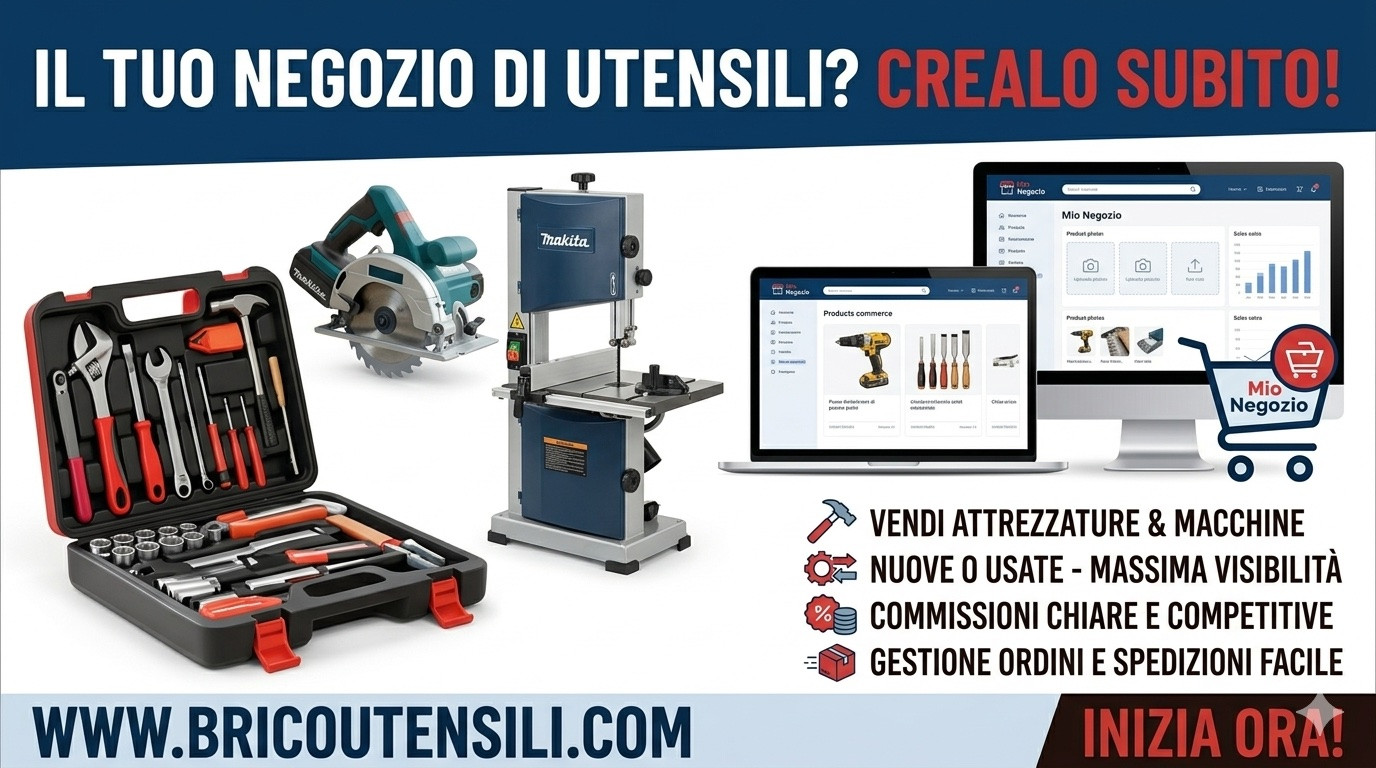
HAVE TOOLS YOU NO LONGER USE? TURN THEM INTO CASH NOW! Are you a hobbyist or a professional with a garage or workshop...
-
 From Hitachi to HiKOKI The Evolution of Power ToolsRead more
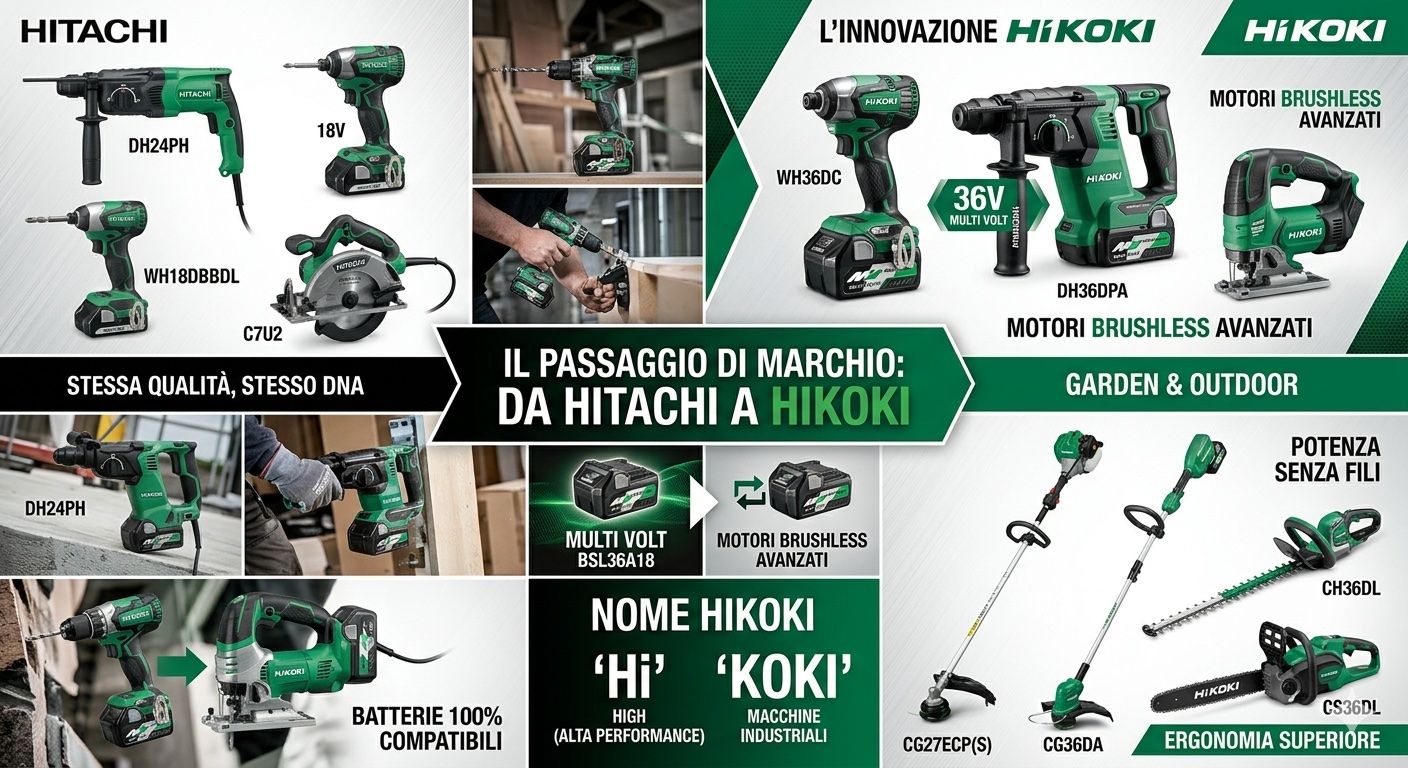
The Context: Why the change? It all began with a major financial operation in 2017. The multinational Hitachi Ltd....
-
 Essential Compendium on Ball BearingsRead more
A guide to ball bearings: types, codes, assembly, and maintenance. Everything you need to know to keep your projects...
-
 Comprehensive Overview of Main Belt TypesRead more
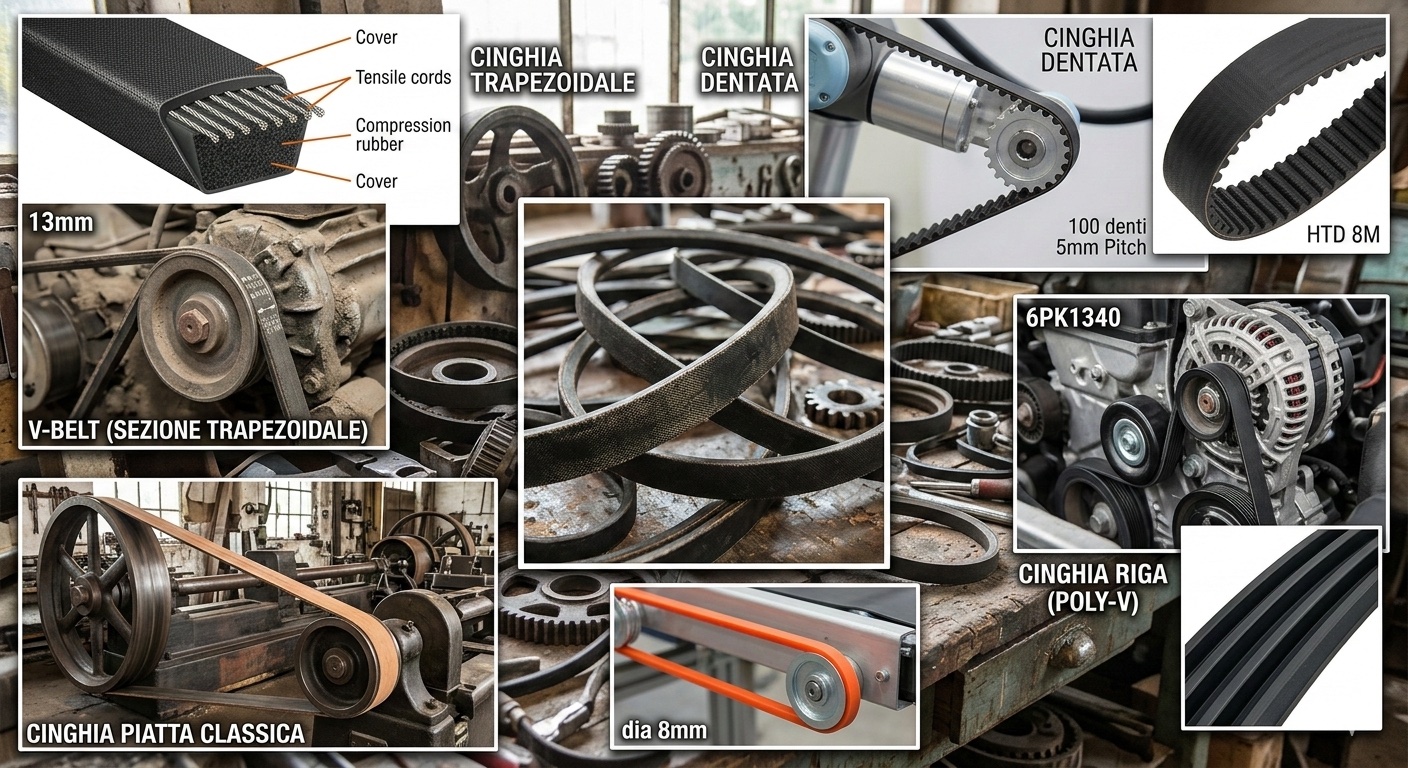
All belt types in a single catalog. Find the perfect replacement among trapezoidal, synchronous, or ribbed profiles....
-
 Dolmar and Makita: When History Meets the FutureRead more
Choosing a Dolmar-Makita electric chainsaw means getting your hands on nearly a century of mechanical innovation....
-
 MMA WELDING by telwinRead more
Arc welding with coated electrodes is a manual process where the heat source consists of the electric arc. When the...
-
 The Future of Commerce through InnovationRead more
The world of commerce has changed forever. The crisis of recent years has spared no one, but it has drawn a clear...
-
 How to Choose the Perfect Demolition HammerRead more
Choosing a demolition hammer is not just about the price; it’s about efficiency and safety. Whether you need to chip...
-
 Expertise at Your ServiceRead more
Choosing the right partner for your work tools is not just about price; it’s about trust, reliability, and...
Blog categories
Search in blog
Essential Compendium on Ball Bearings
Essential Compendium on Ball Bearings
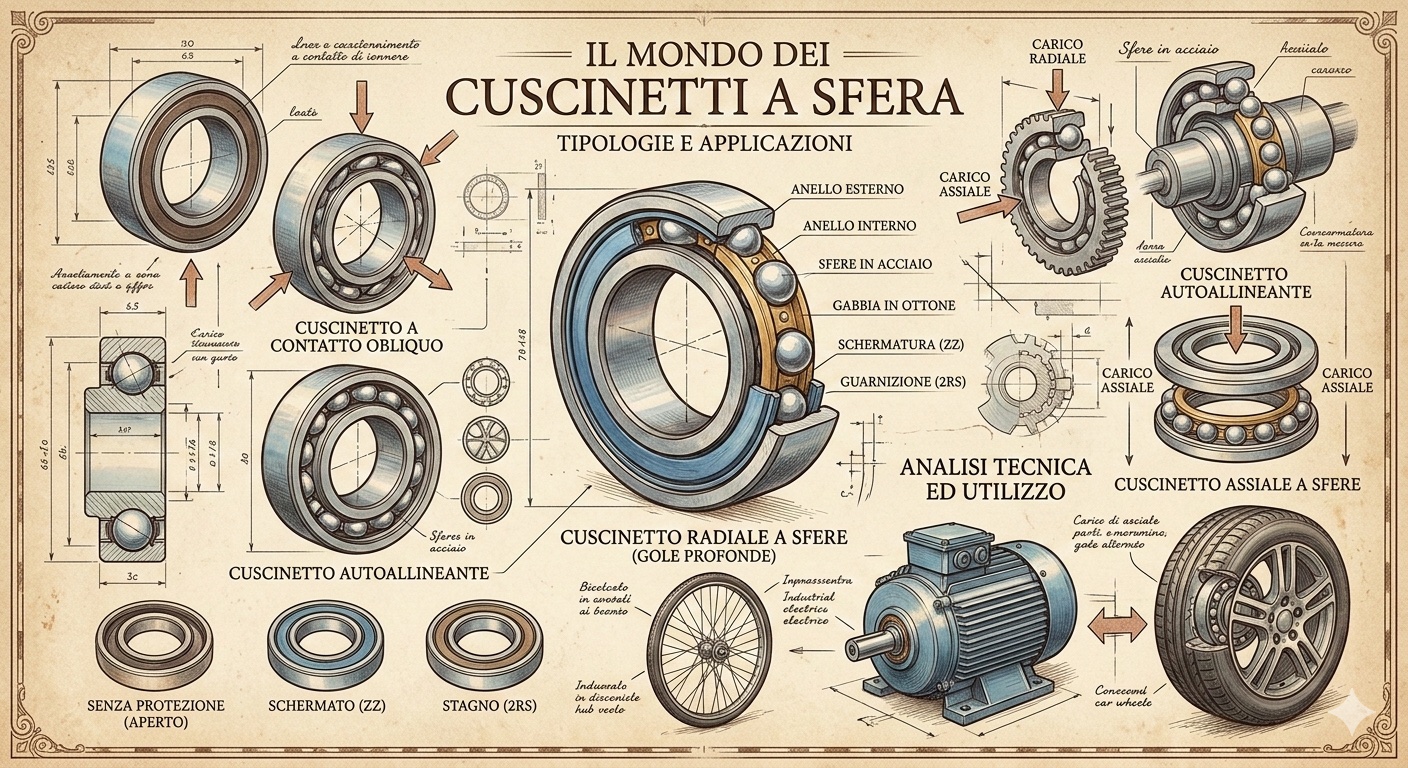
1. How is a Ball Bearing Made?First of all, the basic structure. A standard bearing is composed of four fundamental elements:
Outer Ring: Fits into the housing.
Inner Ring: Mounts onto the rotating shaft.
Rolling Elements (Balls): The components that allow rolling.
Cage (Retainer): Keeps the balls equidistant and prevents them from rubbing against each other.
2. Main Types and Characteristics
Not all bearings are the same. The main difference lies in the type of load they can support: radial (perpendicular to the shaft) or axial (parallel to the shaft).
Type Characteristics Supported Load
Deep Groove Ball Bearings The most common. Versatile, quiet, and suitable for high speeds. Primarily Radial
Angular Contact The tracks are offset. Ideal for combining different loads. Radial + Axial (high)
Self-aligning Feature two rows of balls and a spherical outer track. Tolerate shaft misalignment. Radial
Thrust Ball Bearings Designed for loads that "push" along the axis. Cannot handle radial loads. Axial Only
3. Shielding and Lubrication
A bearing lasts only as long as its protection. There are three common variants:
Open: No protection; requires constant external lubrication (oil bath).
Shielded (ZZ Suffix): Metal shields that protect against coarse dust but not liquids.
Sealed (2RS Suffix): Rubber seals that keep the grease inside and prevent water and dirt from entering.
4. Fields of Use
Application depends on the required precision and speed:
Appliances and DIY: Standard deep groove ball bearings (washing machines, drills, fans).
Automotive: Angular contact bearings for wheel hubs (must support the car's weight and cornering thrust).
Heavy Industry: Spherical roller bearings (similar to ball bearings but more robust) for conveyor belts or machinery subject to bending.
Aerospace and High Precision: Ceramic bearings or those with extremely tight tolerances to withstand extreme rotational speeds.
5. A Technical Note on Service Life
A bearing's life is not infinite. In engineering, we often calculate the Nominal Life L10, which represents the number of revolutions (or hours) that 90% of a group of identical bearings can reach before the first signs of fatigue appear:
L10=(P/C)p
Where:
C is the basic dynamic load rating.
P is the equivalent dynamic load applied.
p is an exponent which is 3 for ball bearings.
Deciphering Bearing Codes
Deciphering bearing codes is a bit like learning a secret language: once you understand the mechanism, a quick glance is enough to know everything about the part in your hand.
Example: 6204-2RS C3
1. The Base Code (Prefix and Series)
The first digits indicate the "family" and the proportions of the bearing.
First Digit (Type): Indicates the construction type.
6: Single row deep groove radial (the classic).
7: Angular contact.
1 or 2: Self-aligning.
5: Thrust ball bearing.
Second Digit (Series): Indicates robustness (ratio between outer and inner diameter).
1: Extra-light series.
2: Light series.
3: Medium series (thicker, handles more load).
4: Heavy series.
2. Bore Diameter (The Last Two Digits)
The last two digits of the main block tell you the size of the center hole (the shaft it fits on).
00: 10 mm | 01: 12 mm | 02: 15 mm | 03: 17 mm
04 and up: Simply multiply by 5.
Example: 04 →04×5=20 mm.
Example: 08 →08×5=40 mm.
3. Suffixes (Shielding and Clearance)
Protection (After the dash):
Z: Metal shield on one side.
ZZ (or 2Z): Metal shields on both sides.
RS: Rubber seal on one side.
2RS (or DDU/EE): Rubber seals on both sides (watertight, higher friction).
Internal Clearance (C Suffix):
No suffix (CN): Normal clearance for standard uses.
C3: Increased clearance. Used if the bearing gets very hot or is mounted with a heavy press fit.
C4: Even higher clearance (extreme industrial uses).
Professional Mounting Rules
The fate of a bearing is decided during installation. A mistreated bearing can lose 50% of its service life before it even starts spinning.
The Cardinal Rule: Never transmit force through the balls.
If mounting on a shaft: Press only on the inner ring.
If mounting in a housing: Press only on the outer ring.
Why? If you press the outer ring to slide it onto a shaft, the force passes through the balls, creating microscopic dents in the tracks (Brinelling).
Mounting Methods:
Cold (Mechanical): For small bearings. Use a mounting tool/sleeve or a hydraulic press.
Hot (Induction): For medium/large bearings. Use an induction heater to reach 80–100°C. The bearing will slide onto the shaft effortlessly. Never use a blowtorch.
Cleanliness: A single grain of dust is like a boulder in the gears. Clean the shaft and do not unwrap the bearing until the very last moment.
Failure Analysis (The "Autopsy")
Sharp Noise/Whistling: Often indicates lack of lubrication.
Dull Noise/Vibration: Likely track or ball damage (Brinelling).
Brinelling: Regular indentations on the tracks caused by hammer blows or impact.
False Brinelling: Shiny or rusted depressions caused by vibration while the machine is stationary.
Fluting: Parallel black grooves/washboard pattern caused by electrical current passing through the bearing (common with inverters). Solution: Ceramic balls or grounding brushes.
Technical Compendium Summary
Practical Guide to Types, Codes, Mounting, and Diagnostics.
Anatomy: Outer Ring, Inner Ring, Balls, Cage.
Types: Radial (versatile), Angular Contact (combined loads), Thrust (axial only), Self-aligning.
Codes: (e.g., 6204-2RS C3) Type + Series + Bore (n×5) + Seals + Clearance.
Golden Rule: Press only on the ring being fitted; never through the balls.
4. Final Success Checklist
Once you have finished your maintenance, make sure you can answer these three questions:
Is the grease correct? (Not all lubricants are equal: high speeds = fluid grease; heavy loads = thick/EP grease).
Is the shaft straight? (An error of just a tenth of a millimeter can kill a bearing in a single week).
Is the necessary clearance maintained? (If using a C3, ensure it still has that minimum "play" after being mounted).
Technical Compendium: The World of Ball Bearings
A practical guide to types, codes, mounting, and diagnostics.
Table of Contents
A ball bearing is a mechanical component designed to reduce friction between two rotating parts. It consists of four key elements:
Outer Ring: Housed in the stationary seat.
Inner Ring: Fixed to the rotating shaft.
Balls (Rolling Elements): Transmit the load through rolling motion.
Cage: Maintains constant spacing between the balls.
2. Types and Loads
The choice of bearing depends on the direction of the applied force:
Radial (Deep Groove): Versatile, for loads perpendicular to the axis.
Angular Contact: Designed for combined loads (radial + axial).
Thrust: Only for thrust along the axis (e.g., footstep bearings).
Self-aligning: Compensates for minor shaft misalignment.
3. Guide to Decoding Part Numbers
Example: 6204-2RS C3
6: Type (Single-row deep groove radial).
2: Series (Robustness/Outer dimensions).
04: Internal Bore (04×5=20 mm). -2RS: Double rubber seal (Watertight).
C3: Increased internal clearance (for high temperatures or high-interference fits).
4. Shields and Radial Clearance
Suffix Shielding Ideal for...
- Open None Oil bath, ultra-low friction.
- ZZ / 2Z Metal Dust, high speeds.
- 2RS / DDU Rubber Water, humidity, dirty environments.
5. Professional Mounting Manual
The golden rule is: Never transmit force through the rolling elements.
Mounting on Shaft: Push only on the inner ring.
Mounting in Housing: Push only on the outer ring.
Methods: Hydraulic press, mounting sleeves, or induction heaters (80–100∘C).
Cleanliness: Do not remove the bearing from its packaging until the moment of installation.
6. Failure Analysis
Identifying the cause of failure prevents the problem from recurring:
Brinelling: Marks on the tracks caused by hammer blows or impacts.
Pitting: Craters caused by fatigue or excessive load.
Fluting: Parallel black grooves caused by stray electrical currents.
Misalignment: An oblique or zig-zag rolling path on the tracks.
Posted in:
Guides & Tips
Related posts
-
From Hitachi to HiKOKI The Evolution of Power Tools
The Context: Why the change? It all began with a major financial operation in 2017. The multinational Hitachi Ltd....Read more
-
Comprehensive Overview of Main Belt Types
All belt types in a single catalog. Find the perfect replacement among trapezoidal, synchronous, or ribbed profiles....Read more
-
Dolmar and Makita: When History Meets the Future
Choosing a Dolmar-Makita electric chainsaw means getting your hands on nearly a century of mechanical innovation....Read more
-
MMA WELDING by telwin
Arc welding with coated electrodes is a manual process where the heat source consists of the electric arc. When the...Read more
-
The Future of Commerce through Innovation
The world of commerce has changed forever. The crisis of recent years has spared no one, but it has drawn a clear...Read more
Leave a comment