
 Italiano
REINVIGORATE YOUR GREEN SPACE: THE SECRET BY BRICOUTENSILI.COM! Spring has arrived, and your garden is calling! Want...

Ultimi Articoli
-
 REINVIGORATE YOUR GREEN SPACERead more
 -
 Become a SellerRead more
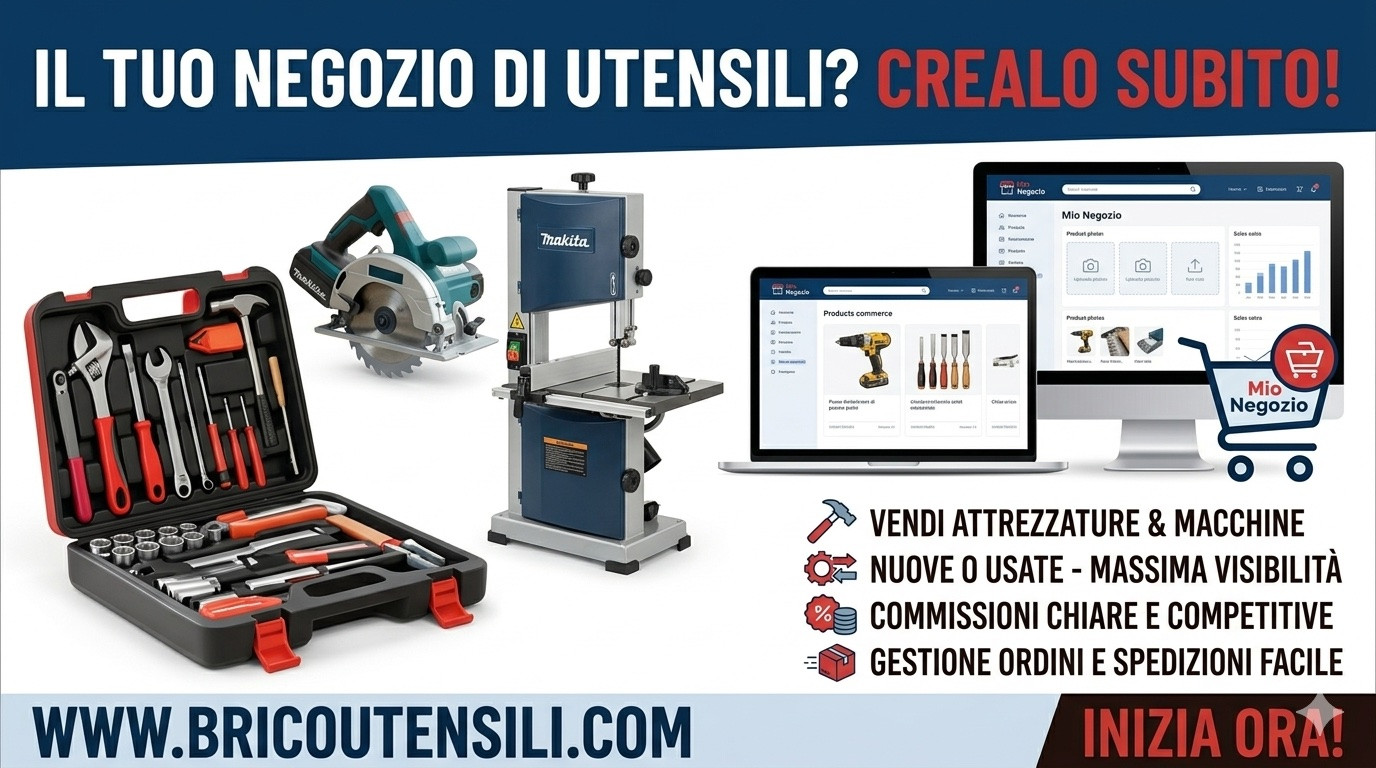
HAVE TOOLS YOU NO LONGER USE? TURN THEM INTO CASH NOW! Are you a hobbyist or a professional with a garage or workshop...
-
 From Hitachi to HiKOKI The Evolution of Power ToolsRead more
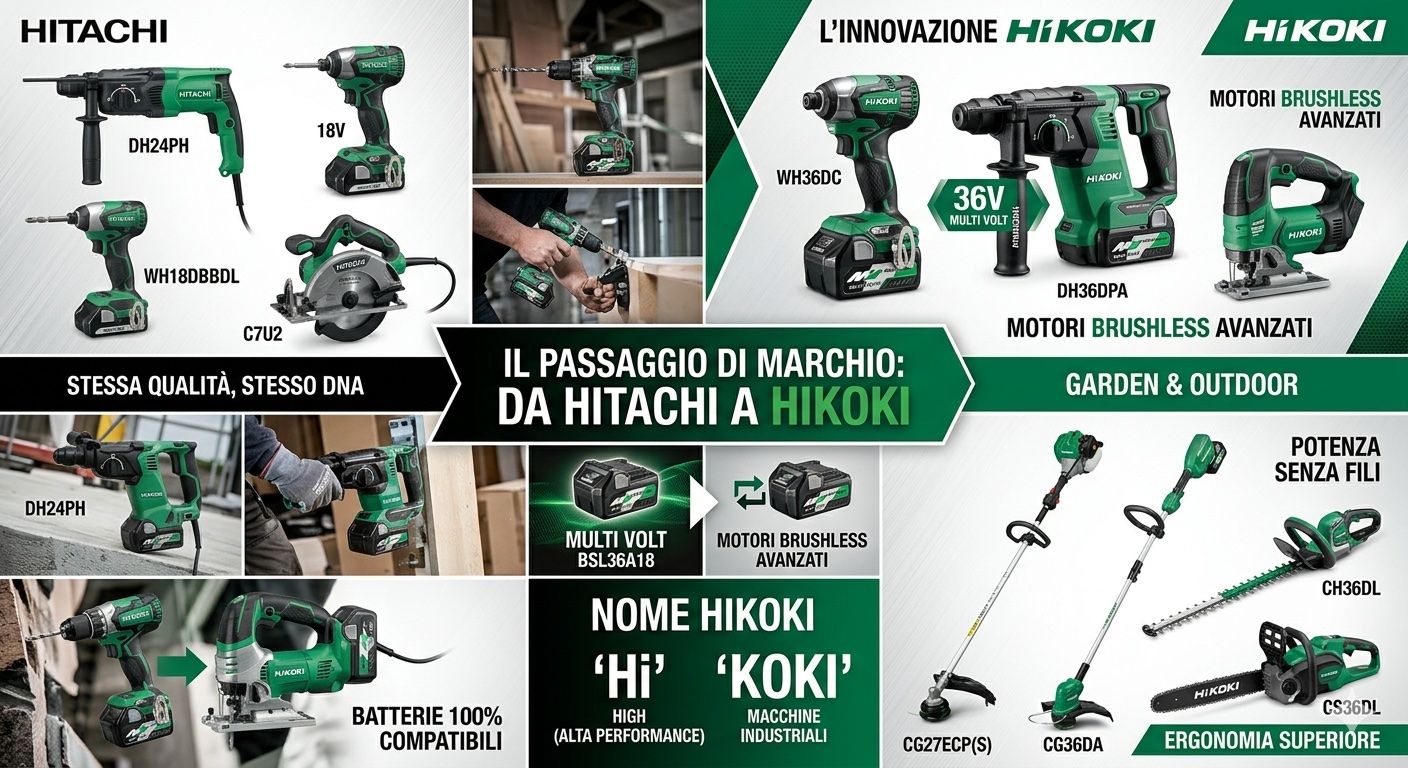
The Context: Why the change? It all began with a major financial operation in 2017. The multinational Hitachi Ltd....
-
 Essential Compendium on Ball BearingsRead more
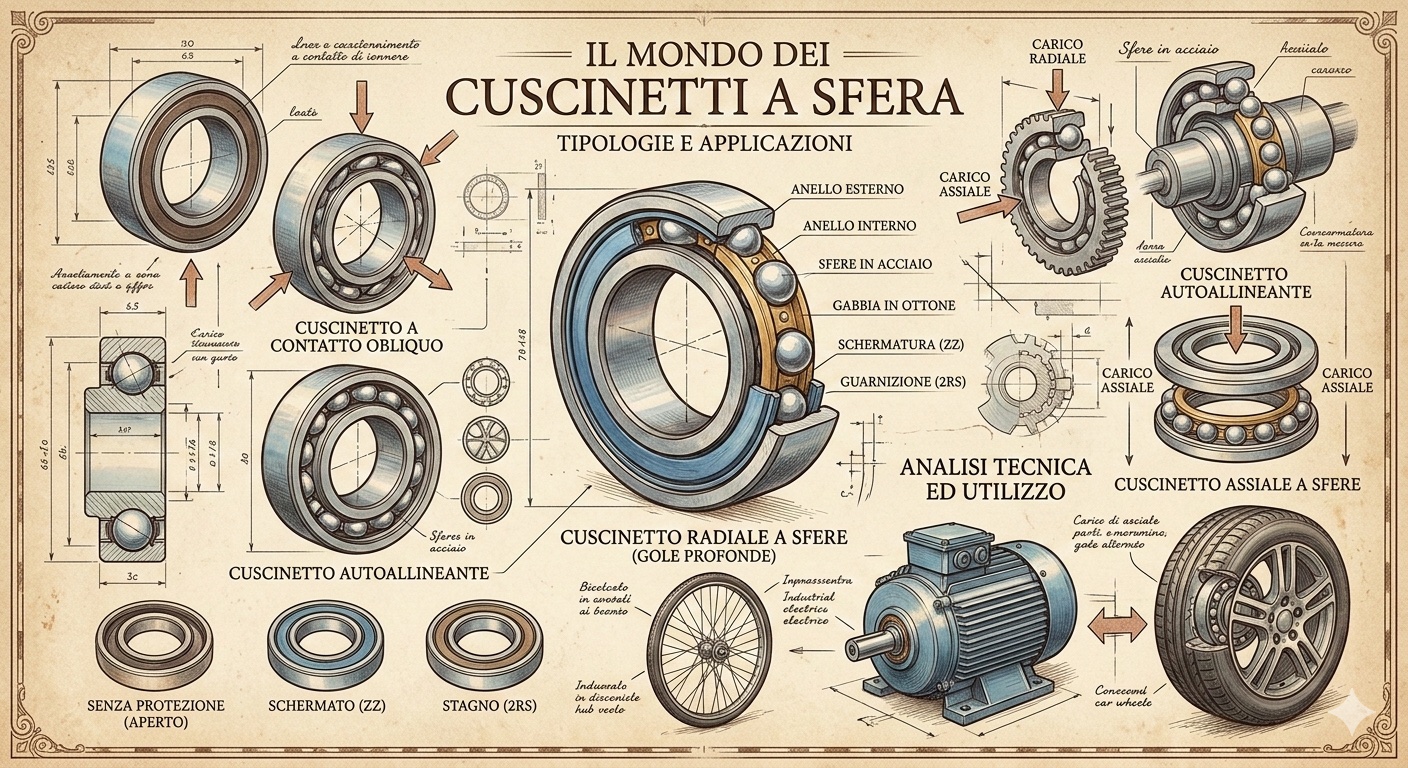
A guide to ball bearings: types, codes, assembly, and maintenance. Everything you need to know to keep your projects...
-
 Comprehensive Overview of Main Belt TypesRead more
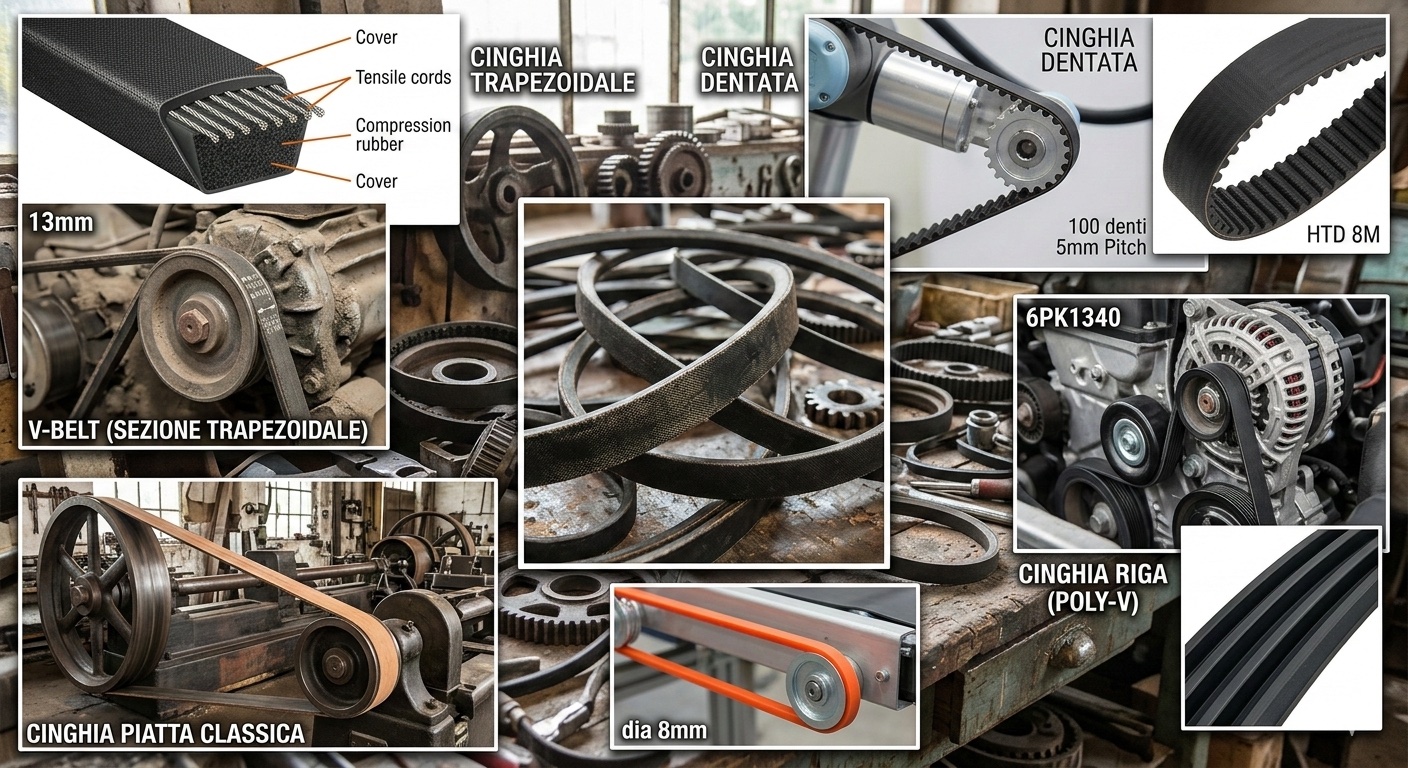
All belt types in a single catalog. Find the perfect replacement among trapezoidal, synchronous, or ribbed profiles....
-
 Dolmar and Makita: When History Meets the FutureRead more
Choosing a Dolmar-Makita electric chainsaw means getting your hands on nearly a century of mechanical innovation....
-
 MMA WELDING by telwinRead more
Arc welding with coated electrodes is a manual process where the heat source consists of the electric arc. When the...
-
 The Future of Commerce through InnovationRead more
The world of commerce has changed forever. The crisis of recent years has spared no one, but it has drawn a clear...
-
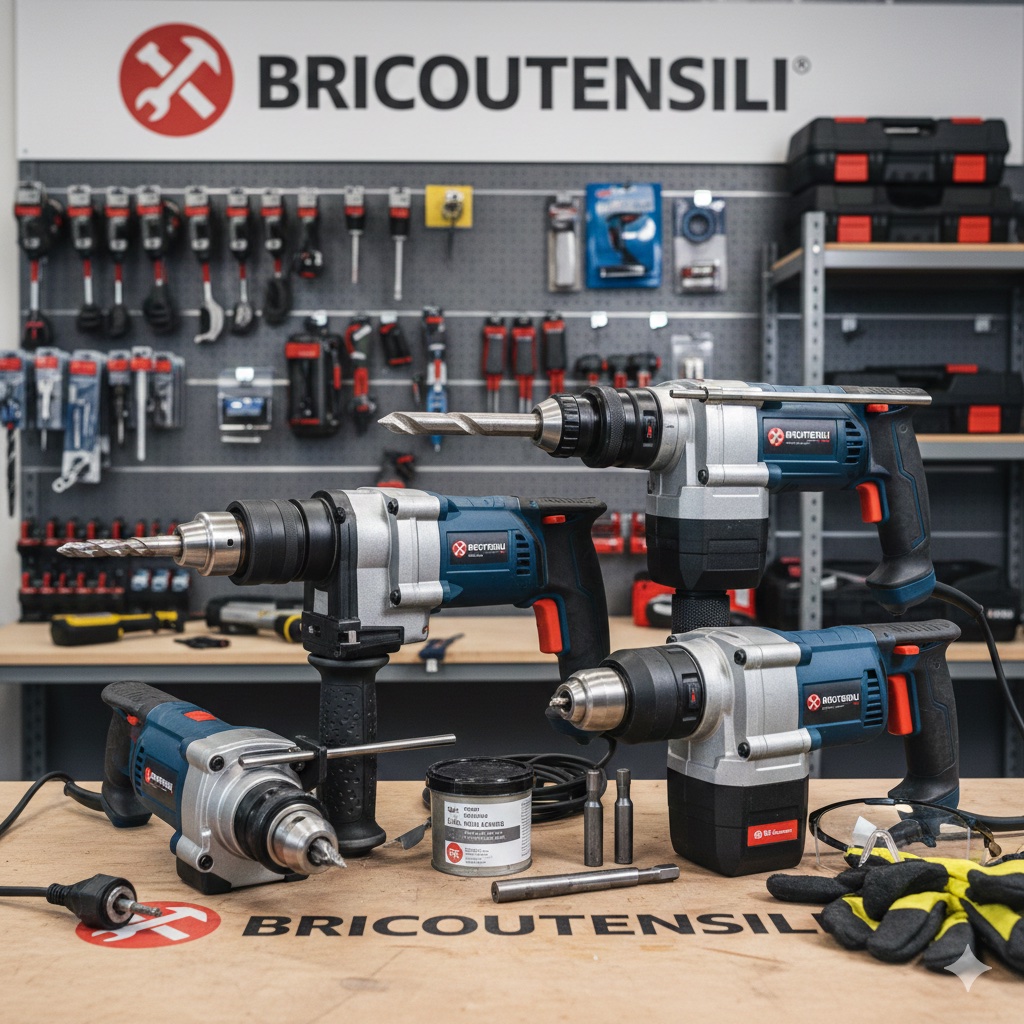 How to Choose the Perfect Demolition HammerRead more
Choosing a demolition hammer is not just about the price; it’s about efficiency and safety. Whether you need to chip...
-
 Expertise at Your ServiceRead more
Choosing the right partner for your work tools is not just about price; it’s about trust, reliability, and...
Blog categories
Search in blog
Comprehensive Overview of Main Belt Types
Comprehensive Overview of Main Belt Types
1. V-Belts (Cinghie Trapezoidali)These are the most common in the industrial and automotive sectors. Their cross-section is an isosceles trapezoid that fits into the pulley groove.
Operating Principle: They use the wedge effect. The pressure on the side walls of the pulley increases friction, allowing the transmission of high torque with relatively low initial tension.
Advantages: Cost-effective, they protect the system from overloads (they can slip if resistance is excessive), and are easy to install.
Variants:
Standard: For general purposes.
Narrow: Transmit more power for the same footprint.
Raw Edge (Cogged): Feature notches on the base to increase flexibility and improve heat dissipation.
2. Timing Belts (Cinghie Dentate)
Unlike V-belts, these work by positive transmission (meshing) rather than friction.
Characteristics: They feature transverse "teeth" that perfectly match the grooves of the timing pulley.
Advantages:
Perfect Synchronism: Essential in engines (timing belt) to keep valves and pistons moving in harmony.
Zero Slippage: Very high efficiency (close to 98%).
Low Maintenance: Do not require lubrication (unlike chains).
Applications: Robotics, 3D printers, camshafts.
3. Ribbed Belts or Poly-V (Cinghie Rigate)
Think of these as a hybrid between a flat belt and a series of small V-belts joined together.
Composition: They have a flat face on one side and longitudinal V-shaped ribs on the other.
Advantages:
They distribute the load across the entire width of the pulley.
They are very thin and flexible, allowing them to run on very small pulleys and follow complex "serpentine" paths (typical in car accessory drives for the alternator, AC, and water pump).
Efficiency: Higher than classic V-belts due to lower energy loss from bending heat.
4. Other Less Common Types
Flat Belts: The "grandparents" of modern belts. Today, they are used less for pure power transmission but are unbeatable for high speeds and machinery requiring extreme precision and minimal vibration.
Round Belts: Usually made of polyurethane, they are used for light loads and low speeds. Their unique feature is that they can be crossed or routed through complex 3D paths.
Quick Comparison Table
| Tabella Comparativa Rapida | |||
| Feature | V-Belt | Timing Belt | Poly-V Belt) |
| - Transmission | Friction | Meshing | Friction |
| - Slippage | Possible (Safety) | Impossible | Minimal |
| - Synchronism | No | YES | No |
| - Noise Level | High | Medium (Whirring) | Very High |
| - Efficiency | ~90-95% | 98% | ~95-97% |
Tips & Tricks
A final "workshop" tip: remember that if you hear a sharp squeal when starting an engine, it is usually the V-belt or Poly-V belt slipping due to low tension or wear. If you hear a ticking or irregular dragging noise, the timing belt might be losing alignment or has damaged teeth (fix this immediately!).
How to Measure Your Belts
1. Measuring a V-Belt
For these belts, length is not enough; you need three precise data points:
Top Width (W): Measure the widest part of the trapezoid.
Height (H): The thickness of the rubber.
Length: Errors often occur here. There are three different measurements:
Li (Internal Length): Measured on the inner circumference.
Le/La (External Length): Measured on the outer back.
Lp/Lw (Pitch Length): The length on the belt's neutral line (where the cords are). This is used for engineering calculations.
Practical Trick: If the belt is intact, mark it with chalk, lay it on a tape measure, and roll it until you return to the mark. If it is broken, simply measure it from end to end.
2. Measuring a Timing Belt
Precision must be millimetric here to ensure proper meshing.
Pitch: The distance from the center of one tooth to the center of the next. Best measured by taking the distance across 10 teeth and dividing by 10.
Width: The cross-sectional width of the belt.
Number of Teeth: The most reliable data. Count every tooth on the belt.
Tooth Profile: Check if the tooth is square (old standards like XL, L, H) or curvilinear (modern standards like HTD, GT).
3. Measuring a Ribbed Belt (Poly-V)
These are identified by a simple international standard.
Number of Ribs: Count the "peaks" on the inner side.
Pitch: The distance between two ribs (most common in cars is the PK profile, with a 3.56 mm pitch).
External Length: Measured in millimeters on the outer back.
Example code: 6PK1200 means 6 ribs, PK profile, 1200 mm length.
Useful Tools
Calipers: Essential for width and thickness.
Flexible Measuring Tape: Ideal for measuring the outer circumference of a closed belt.
Pulley Gauges: If the belt is too worn, measure the pulley groove to identify the original belt type.
One last "money-saving" tip: When installing a new belt, always check pulley alignment with a straight edge or a laser pointer. A perfect belt on misaligned pulleys will last less than half its expected lifespan!
Technical Reference Guide
This table matches the common terms with the international standard codes you will find printed on belts or in supplier catalogs:
For Summary
A quick tip for your codes (5132...)
The codes you provided earlier (e.g., 5132002590) appear to be internal management codes or specific manufacturer part numbers. If you ever lose the reference, remember these steps:
Identify the profile: Measure the top width.
Determine the development: Measure the external length.
Combine the data: For example, a ribbed belt with 6 ribs and a 1200mm length will always be a 6PK1200, regardless of the brand's internal code.
Posted in:
Guides & Tips
Related posts
-
From Hitachi to HiKOKI The Evolution of Power Tools
The Context: Why the change? It all began with a major financial operation in 2017. The multinational Hitachi Ltd....Read more
-
Essential Compendium on Ball Bearings
A guide to ball bearings: types, codes, assembly, and maintenance. Everything you need to know to keep your projects...Read more
-
Dolmar and Makita: When History Meets the Future
Choosing a Dolmar-Makita electric chainsaw means getting your hands on nearly a century of mechanical innovation....Read more
-
MMA WELDING by telwin
Arc welding with coated electrodes is a manual process where the heat source consists of the electric arc. When the...Read more
-
The Future of Commerce through Innovation
The world of commerce has changed forever. The crisis of recent years has spared no one, but it has drawn a clear...Read more
Leave a comment